Commercial Electrician Solutions for Reliable Exterior Lighting

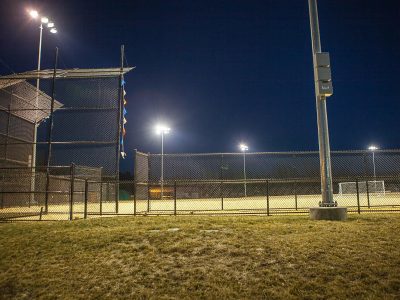
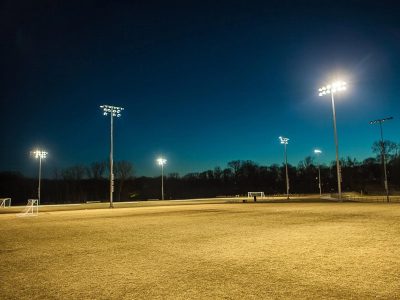
Exterior lighting does more than help people see where they are going. On a commercial property, it affects safety, liability, security, customer confidence, tenant satisfaction, and the way a building is perceived after sunset. A dark parking lot feels neglected. A bright but poorly aimed wall pack can irritate neighbors and still leave blind spots. A sign that flickers every few minutes sends the wrong message before anyone reaches the front door.
That is why exterior lighting is rarely just a fixture problem. It is usually a system problem, and solving it well takes the right eye for design, wiring, controls, code compliance, and long-term maintenance. This is where a skilled Commercial Electrician earns their keep. Good exterior lighting is not simply installed. It is planned, balanced, protected, and maintained with the realities of weather, traffic, vandalism, and operating costs in mind.
I have seen properties spend heavily on new LED fixtures and still end up with poor coverage because the pole spacing was wrong, photocells were installed in bad locations, or branch circuits were loaded without enough thought for future expansion. I have also seen older systems kept in service far longer than expected because someone took the time to trace recurring faults, replace damaged conductors, reseal enclosures, and set controls properly. Reliable exterior lighting comes from practical judgment as much as product selection.
What reliable exterior lighting really means
Reliability in commercial exterior lighting is not just about whether a fixture turns on. A dependable system should provide consistent illumination across critical areas, operate on schedule, hold up in wind and rain, and remain serviceable without constant emergency calls. It should also support the specific use of the site. A hotel entrance needs different lighting behavior than a storage yard. A medical office with evening appointments has different priorities than a warehouse that shuts down at six.
The basics sound simple, but the real-world details are where systems succeed or fail. Parking lot poles take vehicle vibration and weather exposure year after year. Building-mounted fixtures can suffer from water intrusion if the mounting surface is uneven or the sealant fails. Underground feeds get nicked during landscaping work. Time clocks drift. Photocells cycle on and off because they are catching reflected light from nearby fixtures. Motion sensors sound attractive on paper, but in some commercial settings they create inconsistent visibility that frustrates staff and visitors.
A qualified Commercial Electrician looks at the whole chain, from utility service and panel capacity to fixture selection, mounting height, controls, aiming, and maintenance access. If one part of that chain is weak, the system will show it.
Exterior lighting problems that usually point to a deeper issue
The visible symptom is often only the tip of the problem. A lamp outage might be a failed driver, but it can also be heat stress from enclosed housings, poor line voltage, or repeated surges. Corrosion at one pole base may reflect a drainage issue across the site. Flickering fixtures near a sign circuit may reveal a shared neutral problem or a deteriorating connection in a junction box that has been wet for years.
These are some of the warning signs property owners and facility managers should not ignore:
- Lights that cycle on and off, especially after warming up
- Repeated fixture failures in the same area
- Dark patches in parking, walkways, or loading zones
- Tripped breakers after rain or irrigation activity
- Exterior lights that are noticeably brighter or dimmer than neighboring fixtures
Any one of those can lead to a quick fix if treated casually. In practice, the lasting repair often starts with testing voltage under load, checking enclosure integrity, inspecting conductors and terminations, and reviewing whether the fixture and control type actually fit the application.
I remember a retail center where management kept replacing LED drivers on two corner fixtures every few months. The parts were not the real issue. The branch circuit feeding that corner had water intrusion in an underground pull box, and the corrosion was causing intermittent voltage irregularities. Once the damaged conductors and box components were replaced, the driver failures stopped. Before that, they had already spent more on service calls and parts than the proper repair would have cost.
The Commercial Electrician’s role in planning a dependable system
Exterior lighting decisions made early can save years of unnecessary maintenance. An experienced Commercial Electrician does not start with catalog pages. The first step is understanding how the property is used after dark. Where do people walk? Where do trucks back in? Which areas need facial recognition for security cameras? Where are the likely service challenges, such as high poles, landscaped beds, exposed masonry, or rooftop access constraints?
On many sites, reliability begins with circuit layout. Separating critical exterior lighting zones can prevent https://www.google.com/maps?cid=6606672653568213837 a single fault from taking down an entire perimeter. Entrance lighting, egress paths, parking aisles, signage, and security zones often benefit from being divided logically. That makes troubleshooting easier and allows selective control strategies. It also helps when a property changes use or expands.
Load calculations matter too, even with the lower wattage of LED systems. People sometimes assume modern lighting uses so little power that circuit planning is almost irrelevant. That is a mistake. Lower steady-state load does not erase the need to consider driver behavior, control gear, voltage drop on long runs, spare capacity, and the cumulative effect of adding signs, receptacles, gate operators, or seasonal loads later. Long parking lot circuits, in particular, can create performance headaches if voltage drop is ignored.
A careful electrician will also think about serviceability. Can drivers be replaced without renting a lift every time? Are poles and handholes accessible? Are fixtures mounted where cleaning and inspection can be done safely? Is there enough documentation so the next technician can identify circuits without guessing? Those questions do not sound glamorous, but they have a direct effect on downtime and maintenance cost.
Matching fixture types to the site, not the sales brochure
A common source of unreliable exterior lighting is using the wrong fixture in the wrong place. A product may look efficient on paper and still perform poorly if its optics, ingress protection, or thermal characteristics do not match the environment.
Wall packs are often selected for rear service areas, side yards, and perimeter walls. They work well when mounted at the right height and aimed to avoid harsh hotspots. Pole lights are the backbone of many parking areas, but their spacing and distribution pattern need to align with traffic flow and pedestrian routes, not just the geometry of the lot. Canopy fixtures suit covered drop-offs, fueling stations, and loading canopies, where uniformity and glare control are important. Bollards can define pathways attractively, but they are vulnerable in high-traffic areas and are not a substitute for broader-area illumination.
The best installations balance illumination levels with visual comfort. Too little light creates hazards. Too much light, or light placed badly, creates glare that can be just as dangerous, particularly when drivers move from dark areas into overlit ones. I have walked sites where every fixture was technically working, yet visibility felt worse because the contrast between bright pools and dark gaps was so severe.
Color temperature and color rendering also deserve practical consideration. Cooler white light may feel brighter, but it is not always the best choice around hospitality, multifamily, or customer-facing entrances. Warmer or neutral tones can make a property look more welcoming while still delivering good visibility. In service yards or loading areas, priorities may lean more toward task visibility and durability. There is no single perfect specification for every exterior zone.
Controls that help, and controls that create headaches
Exterior lighting controls can improve efficiency and consistency, but only when they are chosen and set up with care. The old habit of relying on a single photocell for an entire property still exists, and sometimes it works fine. On more complex sites, though, that approach often falls short. Different areas have different schedules, and some loads should have backup control methods in case a device fails.
Photocells are useful because they respond to actual daylight conditions, but placement matters. If a photocell sees direct fixture light or unusual reflections, it may short cycle. Time clocks offer predictable scheduling, yet they need correct programming and occasional review, especially after power disruptions or seasonal schedule changes. Astronomical clocks can be a strong option because they track sunrise and sunset without a light sensor, though they still need proper commissioning. Motion controls have their place in low-traffic side areas, storage enclosures, and selective security zones, but they are rarely a good fit for primary pedestrian routes or customer parking where steady illumination is expected.
For many properties, the smartest approach is layered control. Entry zones stay on from dusk until close, perimeter lights remain active all night, decorative accents shut off earlier, and a few lower-priority areas step down rather than turn off completely. That setup requires more planning at the electrical level, but it often pays back in both energy savings and fewer complaints.
Surge protection is another part of control reliability that gets overlooked. Exterior lighting circuits are exposed to weather and long conductor runs, which makes them more vulnerable to transient voltage events. A Commercial Electrician who recommends surge protective devices for panels or sensitive lighting circuits is not overselling. On many sites, especially those with pole lighting and LED drivers, it is basic protection against nuisance failures.
Weather, corrosion, and the slow damage owners miss
Exterior electrical work lives a hard life. Heat bakes housings and gaskets. Cold makes brittle materials fail faster. Rain finds weak seals. Lawn equipment damages pole bases and conduit risers. Irrigation soaks areas that were never meant to stay wet. In coastal environments, salt accelerates corrosion to a degree inland owners sometimes underestimate.
Reliable lighting depends heavily on installation details that are easy to skip when a job is rushed. Conduit entries need proper fittings and sealing. Enclosures need gaskets that are intact and appropriate for the location. Pole bases should be checked for rust, movement, and anchor bolt condition. Grounding and bonding need to be right, not assumed. Handholes and pull boxes should drain correctly and remain accessible. If they fill with mud or standing water, a future fault is almost guaranteed.
I once looked at a row of decorative bollards outside a medical office that had failed one after another over two winters. The fixtures themselves were not the main problem. The area was heavily irrigated, and the splices below grade had been made in a way that did not hold up to repeated saturation. The owner thought they had bought a bad product line. What they really had was an installation method that was not suited to the conditions.
This is where experienced field judgment matters. Two sites with the same fixtures can have very different outcomes based on drainage, exposure, traffic, and workmanship.
Code compliance is not paperwork, it is risk management
When owners hear "code compliance," they sometimes think only of inspections and permits. On exterior lighting, code-related decisions often affect safety and liability in direct ways. Proper grounding, GFCI protection where required, conductor sizing, overcurrent protection, support methods, and equipment ratings all matter. So does emergency egress lighting where applicable, including how it interfaces with backup power systems.
A Commercial Electrician familiar with local requirements can prevent problems that do not show up immediately after installation. For example, fixture placement near combustible materials, unsupported raceways, or poorly protected low-voltage control wiring may not fail on day one, but those shortcuts become expensive later. The same is true when someone installs attractive decorative fixtures that are not listed for the actual exposure conditions.
There is also a liability dimension that owners sometimes feel only after an incident. If a trip, slip, break-in, or vehicle accident happens in an area with chronic lighting failures, maintenance records and repair response times suddenly matter. Reliable lighting is a daily operations issue, but it is also part of a property’s defensible safety posture.
Retrofit or replace, making the right call
Not every unreliable system needs a full replacement. There are cases where targeted repairs and upgrades make far more sense than starting over. There are also properties where piecemeal fixes have gone on too long, and a structured retrofit is the only economical path.
The right decision usually depends on a handful of practical factors:
- Age and condition of wiring, poles, and enclosures
- Frequency of outages or repeat service calls
- Availability of compatible replacement parts
- Energy use compared with current operating goals
- Whether the site layout or business hours have changed
An older metal halide parking lot system, for example, may still function, but if ballast failures are becoming common and the site needs better uniformity, an LED retrofit or fixture replacement can solve several issues at once. On the other hand, a relatively modern LED system with sporadic failures may only need improved surge protection, new controls, and selective fixture replacement.
Owners should be cautious about the cheapest retrofit path. Swapping lamps or heads without reviewing drivers, mounting integrity, optics, and controls can leave half the original problems intact. The result is a property that technically has new lights but still delivers poor performance and unreliable operation.
Maintenance that prevents midnight emergency calls
Exterior lighting maintenance is often reactive because many teams are stretched thin. Someone notices a dark area, puts in a work order, and a technician responds when the issue becomes visible enough to demand attention. That approach is common, but it is expensive in the long run.
A more dependable strategy is periodic inspection tied to seasons and site conditions. Before winter, control settings and startup behavior deserve a look because longer nights expose weaknesses quickly. After storm season, poles, fixtures, and enclosures should be checked for impact, water entry, and shifting. On landscaped properties, trims and irrigation changes can affect light output more than owners expect. Dust, insects, and debris inside or around optics can gradually reduce actual illumination even when fixtures still appear operational.
Good documentation also matters. A circuit map, panel schedule updates, fixture inventory, and service history can cut diagnostic time dramatically. If a property manager can tell the electrician that pole lights on circuits LP-3 and LP-4 began tripping after irrigation repairs in the west lot, the troubleshooting path gets much shorter.
The best facility teams I have worked with treat exterior lighting like any other critical system. They do not wait for complete failure in a customer-facing area. They watch patterns. They track repeat faults. They schedule inspection before peak occupancy seasons, not after complaints pile up.
Security, appearance, and operating cost can coexist
One of the more persistent myths in exterior lighting is that owners must choose between safety and efficiency. In practice, well-designed systems can deliver both. Modern fixtures, smart control zoning, and better optics make it possible to reduce waste while improving visibility where it counts.
The catch is that efficiency should never come from indiscriminate dimming or removing fixtures without understanding the site. I have seen parking areas where every other fixture was shut off to save money, only for tenants to start requesting escorts to their cars. That kind of savings rarely holds once complaints, incident concerns, and rushed rework enter the picture.
Appearance matters too. Exterior lighting is part of a brand experience. Restaurants, offices, medical buildings, and mixed-use properties all benefit from lighting that feels intentional. That does not mean overlighting facades or turning every architectural feature into a spotlight target. It means using enough light, in the right places, with enough consistency that the property feels safe, maintained, and open for business.
A seasoned Commercial Electrician often acts as a translator between operational needs and visual goals. Security teams may want more brightness everywhere. Owners may want lower bills. Designers may want cleaner sightlines and warmer color tones. The electrician’s role is to turn those competing preferences into a workable system that survives real use.
Choosing the right Commercial Electrician for exterior lighting work
Not every electrical contractor approaches exterior lighting with the same depth. Some are strong at new construction but less effective at troubleshooting aging site systems. Others can handle service calls well but may not have much experience with photometrics, controls integration, or larger parking lot distribution planning.
When evaluating a Commercial Electrician, look for someone who asks detailed questions about site use, outage history, controls, and maintenance concerns. Pay attention to whether they inspect more than the failed fixture. If they are willing to discuss voltage drop, access logistics, weather exposure, and future expansion, that is usually a good sign. If the conversation stays at the level of simply replacing what is there, the recommendation may be too narrow.
It also helps to work with contractors who document findings clearly. Exterior lighting issues can span months or years, especially on larger properties. A clear record of test results, probable causes, completed repairs, and recommended next steps helps owners make better decisions instead of lurching from one emergency call to the next.
Reliable exterior lighting is not an accident. It comes from a combination of sound design, competent installation, realistic control strategies, protective measures against weather and surges, and maintenance that catches small problems before they spread. For commercial properties, that combination is best delivered by a Commercial Electrician who understands that a light fixture is only one visible part of a larger electrical system.
When that system is built and maintained properly, people rarely think about it, and that is exactly the point. Customers arrive without hesitation. Staff leave safely. Deliveries move efficiently. Security cameras capture usable images. The property looks open, cared for, and credible. Those results come from reliable exterior lighting, and reliable exterior lighting comes from disciplined electrical work.
Paxos Electric Company, LLC
255 NJ-15
Wharton, NJ 07885
(973) 598-8543
FAQ About Commercial Electrician
How much should a commercial electrician charge per hour in Wharton NJ?
Hourly rates vary by contractor, job complexity, and timing. Ask whether the quote includes a service minimum, travel, materials, and any after-hours charges. A written estimate makes it easier to compare the total cost.
How to estimate commercial electrical jobs?
Start with a defined scope and a site walkthrough. Share the plans, equipment specifications, site access details, and any limits on shutdowns. Ask the contractor to itemize labor, materials, and testing, and to identify permit responsibilities and exclusions.
Do any electricians give free estimates?
Some contractors offer free estimates for planned projects. Paxos Electric Company offers free estimates for commercial electrical work. Ask when scheduling whether troubleshooting or diagnostic visits carry a separate fee.